China Justice Observer

中司观察

EnglishArabicChinese (Simplified)DutchFrenchGermanHindiItalianJapaneseKoreanPortugueseRussianSpanishSwedishHebrewIndonesianVietnameseThaiTurkishMalay

Hong Kong Adopts UN Convention on Contracts for the International Sale of Goods

Sat, 29 Jan 2022
Categories: China Legal Trends

On 29 Sept. 2021, the Legislative Council of the HKSAR passed the Sale of Goods (United Nations Convention) Ordinance (hereinafter “the Ordinance”).

The newly-adopted Ordinance would allow the CISG to be fully applicable in HKSAR without any reservations.  

China submitted its ratification for the official accession to the CISG in 1986 and the convention has been in force in China since 1988.

When China resumed the exercise of sovereignty over Hong Kong in 1997, it submitted a declaration to the Secretary-General of the United Nations, which set out a list of conventions to which China had acceded and thus should be subsequently applied to Hong Kong after its return to China. The CISG was not included in that list, and therefore the HKSAR was excluded in the CISG framework.

Currently, the Central Government of the PRC has entered the CISG with reservations to Article 1(1)(b). However, the HKSAR will not have any reservation to Article 1(1)(b) of the CISG (i.e. the scope of application of the CISG).


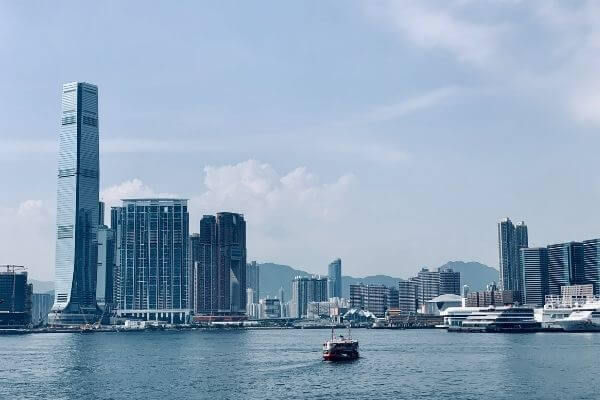
Cover Photo by Arun Raj on Unsplash

Contributors: CJO Staff Contributors Team
Save as PDF

You might also like

PRC Double Interest neither Double nor Penal, Australian Courts Clear Its Name When Enforcing Chinese Judgments

Recent Australian case law clarifies that the “double interest” mechanism in the People’s Republic of China (hereafter ‘PRC’) monetary judgments functions as a compensatory post-judgment interest framework rather than an unenforceable penalty. This consolidates Australia’s position as a highly attractive and creditor-friendly forum for enforcing Chinese judgments. See Zhengzhou Lvdu Real Estate Group Co v Shu [2024] NSWSC 58 (6 February 2024), Fu v Pang [2025] VSC 597 (16 September 2025)

IOMed Settles First Case, Resolving China-Singapore Maritime Dispute

The newly established International Organization for Mediation (IOMed) has successfully resolved its inaugural case—a maritime charter dispute between Chinese and Singaporean parties—marking a major milestone for the world’s first government-backed global mediation body.

China Overhauls Arbitration Law for Global Alignment

Having entered into force on March 1, 2026, China’s first comprehensive revision of its 1995 Arbitration Law has introduced ad hoc arbitration, strengthened interim relief, and aligned the legal framework more closely with international standards.