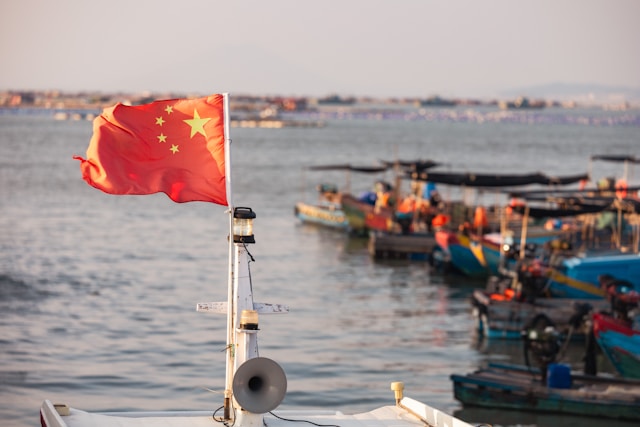
The revised Arbitration Law of the People's Republic of China officially came into force on March 1, 2026. On the very same day, a foreign-related maritime dispute was adjudicated in Wenchang, capturing international attention as the first ad hoc arbitration conducted under the modernized statutory framework.
Related Post:
The case arose from a collision liability dispute between a foreign-registered Very Large Crude Carrier and a Chinese-flagged coastal vessel. Following the incident, the Hainan Maritime Safety Administration—acting through its Shipping Dispute Diversified Resolution Center—expeditiously completed the accident investigation, issued the liability determination, and secured critical evidence. The agency then guided both parties toward the newly available ad hoc arbitration mechanism. Concurrently, the Hainan Arbitration Association provided administrative support on the applicable rules and recommended a sole arbitrator with extensive maritime expertise and international arbitration experience.
The proceedings formally commenced on the morning of March 1, and the final arbitral award was rendered that afternoon. The entire process was completed within a single day, significantly minimizing time and litigation costs for both parties.
Unlike institutional arbitration, ad hoc arbitration allows parties to directly select their arbitrators to form a temporary tribunal that dissolves once the final award is issued, offering unparalleled flexibility and autonomy.
In September 2025, the Standing Committee of the National People’s Congress (NPCSC) adopted the first comprehensive overhaul of the Arbitration Law since 1995. The landmark revision introduced ad hoc arbitration to mainland China, permitting its use for foreign-related commercial disputes involving enterprises registered in Free Trade Zones (FTZs) or Free Trade Ports (FTPs), as well as foreign-related maritime disputes. Legal experts note that the swift and successful resolution of this inaugural case underscores the high efficiency and commercial viability of China's new ad hoc arbitration framework.
Photo by Joseph Costa on Unsplash
Contributors: CJO Staff Contributors Team