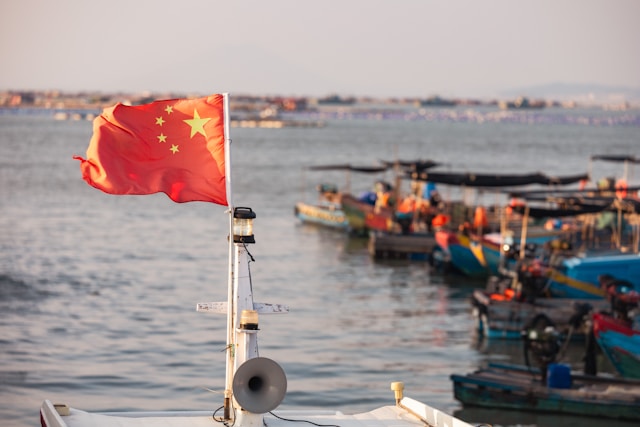
Among the 2025 National Maritime Trial Typical Cases released by the Supreme People's Court on June 24, 2026, a contract dispute over maritime cargo transportation adjudicated by the Shanghai Maritime Court has garnered significant attention. The ruling marks the first time a Chinese court has explicitly affirmed, through an effective judgment, the mandatory and overriding application of the Anti-Foreign Sanctions Law of the People's Republic of China.
Related Posts:
- China Promulgates Regulations to Systematize Framework Against Foreign Extraterritorial Overreach
- China Details Implementation Rules for Anti-Foreign Sanctions Law
The dispute arose when a Hong Kong enterprise retained a Singaporean carrier to ship a consignment of electronic products from the Port of Shanghai to Panama. After taking possession of and loading the cargo, the carrier abruptly refused to issue a bill of lading or deliver the goods at the destination port, citing the shipper’s designation on a foreign state's unilateral sanctions list. Although the Shanghai Maritime Court promptly issued a mandatory maritime injunction, the carrier defied the order and unilaterally rerouted the vessel to return the cargo to Shanghai, prompting the shipper to file a suit for damages.
The court held that the carrier’s refusal to perform its transit obligations and its unauthorized forced return of the cargo based solely on foreign unilateral sanctions constituted a fundamental breach of contract. Pursuant to Article 12 of the Anti-Foreign Sanctions Law, no organization or individual may implement or assist in implementing discriminatory restrictive measures enacted by foreign states against Chinese citizens or entities.
The court ruled that the carrier’s defense—premised on the fear of being implicated by foreign secondary sanctions—amounted to assisting in the enforcement of foreign discriminatory restrictions. Consequently, it could not serve as a legitimate ground for exempting or mitigating its liability for breach of contract. The court ordered the carrier to pay over RMB 4.99 million (approx. USD 700,000) in compensation for the cargo loss plus accrued interest, while dismissing all of the carrier’s counterclaims.
This landmark judgment firmly establishes that foreign unilateral sanctions cannot be invoked as a valid defense for non-performance of contractual duties, providing definitive judicial guidance for enterprises navigating complex extraterritorial sanctions regimes.
Related Posts:
- China Promulgates Regulations to Systematize Framework Against Foreign Extraterritorial Overreach
- China Details Implementation Rules for Anti-Foreign Sanctions Law
Photo by Kinsey Wang on Unsplash
Contributors: CJO Staff Contributors Team